


Melanotan 1 is a linear synthetic analogue of alpha-melanocyte-stimulating hormone, distinguished within the melanocortin family by its selectivity for the MC1 receptor. Where the cyclic analogue engages several receptor subtypes, this compound concentrates activity at the receptor governing melanin synthesis, which makes it the preferred tool where pigmentation pathways must be studied without confounding central melanocortin signaling.
- Product Name: Melanotan 1
- Unit Size: Multiple vial sizes available
- Other Names: MT-1, Afamelanotide, Melanotan I
- Form: Lyophilized solid
The analogue has been characterized in published receptor-binding and clinical work documenting MC1R-mediated increases in eumelanin production. It has been studied clinically in photodermatoses, where the research rationale is photoprotection through increased melanin density rather than any systemic melanocortin effect, and that body of work provides the most extensively documented human data of any melanocortin analogue.
What Is Melanotan 1
Melanotan 1, also designated afamelanotide, is a linear analogue of alpha-MSH supplied as a lyophilized solid for laboratory research. It retains the native peptide’s linear architecture with substitutions that resist enzymatic degradation, rather than adopting the cyclic structure used by its counterpart analogue.
Mechanism of Action: How Does Melanotan 1 Work
The peptide binds the MC1 receptor on melanocytes with high selectivity relative to other melanocortin subtypes. Receptor engagement activates adenylate cyclase, raising intracellular cyclic AMP and activating microphthalmia-associated transcription factor, which drives transcription of tyrosinase, the rate-limiting enzyme of melanin synthesis. The downstream result documented in the literature is a shift in the eumelanin-to-pheomelanin ratio toward eumelanin, the darker and more photoprotective pigment. Because affinity for MC3R and MC4R is comparatively low, the central signaling effects associated with broader melanocortin agonists are largely absent.
- MC1R-selective agonism → adenylate cyclase activation in melanocytes
- Elevated cyclic AMP → MITF transcription factor activation
- Tyrosinase induction → increased melanin synthesis
- Eumelanin shift → increased photoprotective pigment density
- Low MC3R/MC4R affinity → minimal central melanocortin signaling
Core Areas of Scientific Investigation
- MC1R Selectivity: Melanotan 1 is the reference selective agonist used to isolate MC1 receptor effects from broader melanocortin activity.
- Melanogenesis Research: investigators study tyrosinase induction and eumelanin-pheomelanin balance in melanocyte culture.
- Photoprotection Models: published work examines melanin density and ultraviolet response in dermal research models.
- Comparative Selectivity Studies: paired against the cyclic analogue, it defines one end of the melanocortin selectivity series.
Melanotan 1 Dosage in Published Research
Doses reported in the published literature are expressed in milligrams administered as a subcutaneous implant in human study cohorts, and in micrograms per kilogram administered subcutaneously in animal models. Figures vary by route and should be read from the individual publications. These are published parameters of completed experiments. They are not a recommendation, and no administration protocol is supplied with this product.
Adverse Events Reported in the Literature
Nausea, headache, and implant-site reactions were among the more frequently reported adverse events in published clinical cohorts, alongside generalized skin darkening consistent with the receptor mechanism. These are reported findings from the published literature, not safety guidance for this product.
Usage, Reconstitution and Storage
Supplied as a lyophilized solid to preserve stability during transport and storage. The peptide is sensitive to repeated freeze-thaw cycling and to prolonged light exposure, and reconstituted material has a materially shorter stability window than the sealed vial.
Pure Peptides recommends bacteriostatic water as the reconstitution solvent, and that both the lyophilized material and the chosen solvent be allowed to reach ambient laboratory temperature before reconstitution. This helps maintain structural integrity during dissolution. Reconstitution solutions and a peptide storage case are supplied separately.
Legal and Safety Information
All Pure Peptides products, including Melanotan 1, are sold exclusively for scientific and research purposes. This product is a laboratory reference standard for in vitro and animal research applications. It is not a dietary supplement, medical food, cosmetic, or drug. It has not been evaluated by the Food and Drug Administration (FDA) and is not approved for therapeutic, diagnostic, or recreational human consumption. Enquiries regarding human consumption cannot be answered. Any use outside an authorized laboratory environment is strictly prohibited.
Technical Data
| Identification | |
| Molecular Class | Linear alpha-MSH analogue, MC1R-selective agonist |
| Physical and Chemical Properties | |
| Physical Appearance | White lyophilized solid |
| Form | Sterile filtered white lyophilized (freeze-dried) |
| Solubility | Aqueous soluble |
| Recommended Solvent | Bacteriostatic water |
| Research Use and Safety | |
| Caution | Research use only / Not for human or veterinary use |
| Storage, Handling and Stability | |
| Storage Temperature (lyophilized) | Store desiccated below −18°C |
| Storage Temperature (reconstituted) | Store at 4°C for short-term use; below −18°C for future use |
| Light Sensitivity | Protect from light |
Why Choose Pure Peptides Reference Compounds
When executing high-level metabolic research, compounding variables can compromise data integrity. We isolate and eliminate those variables.
- Verified High Purity: every batch is analyzed by high-performance liquid chromatography, with the purity profile recorded against the lot.
- Structural Stability: the synthesis protocol yields stable chains that resist premature degradation under the recommended storage conditions.
- Temperature-Shielded Logistics: shipped in insulated packaging to preserve structural integrity in transit to the receiving laboratory.
- Full Batch Traceability: lot number and manufacture date are recorded for every vial.
Suggested Research Combinations
- Melanotan 2 (MT-2) — the broad-spectrum cyclic analogue, the essential comparator for establishing subtype selectivity.
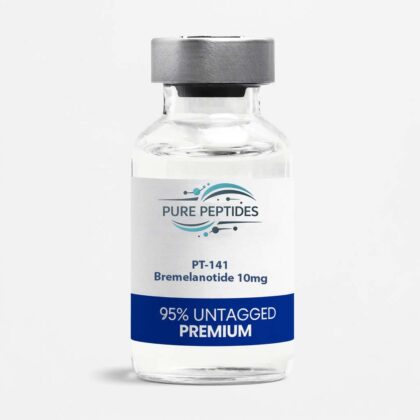
- PT-141 (Bremelanotide) — an MC3R/MC4R-weighted analogue, completing the melanocortin selectivity series.
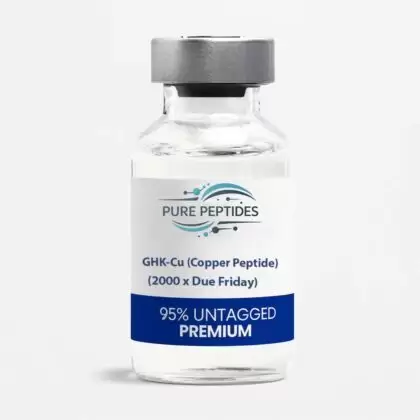
- GHK-Cu — a copper tripeptide studied in dermal matrix research, run in parallel where skin endpoints are assessed together.
Frequently Asked Questions
What is afamelanotide?
Afamelanotide is the alternative designation for this same linear alpha-MSH analogue. Both names appear across the research and clinical literature and refer to the identical compound.
Why is MC1R selectivity useful in research?
It allows pigmentation pathways to be studied without the central melanocortin signaling that broader agonists produce at MC3R and MC4R. That separation is what makes this compound the reference tool for melanogenesis work specifically.
How does it change pigment production?
MC1R engagement raises cyclic AMP and activates microphthalmia-associated transcription factor, which drives tyrosinase transcription. The documented result is a shift in the eumelanin-to-pheomelanin ratio toward eumelanin, the darker pigment.
How should this peptide be stored?
The sealed lyophilized vial should be stored desiccated below minus 18 degrees Celsius and protected from light. Once reconstituted, material should be held at 4 degrees Celsius for short-term use or below minus 18 degrees Celsius for longer-term storage.
Is this product approved for human use?
No. This material is a laboratory reference standard supplied strictly for in vitro and preclinical research. It has not been evaluated by the Food and Drug Administration and is not approved for therapeutic, diagnostic, or human application of any kind.
Regulatory Status
Melanotan 1 is supplied strictly for in vitro and preclinical research purposes. Its use is considered experimental; long-term safety and efficacy in humans have not been established. All referenced findings derive from published preclinical and clinical research, and results in one model may not translate to another.

Reviews
There are no reviews yet.